Category: Exhibitions

  • Albert Schweitzer, 1875–1965

    Albert Schweitzer, 1875–1965

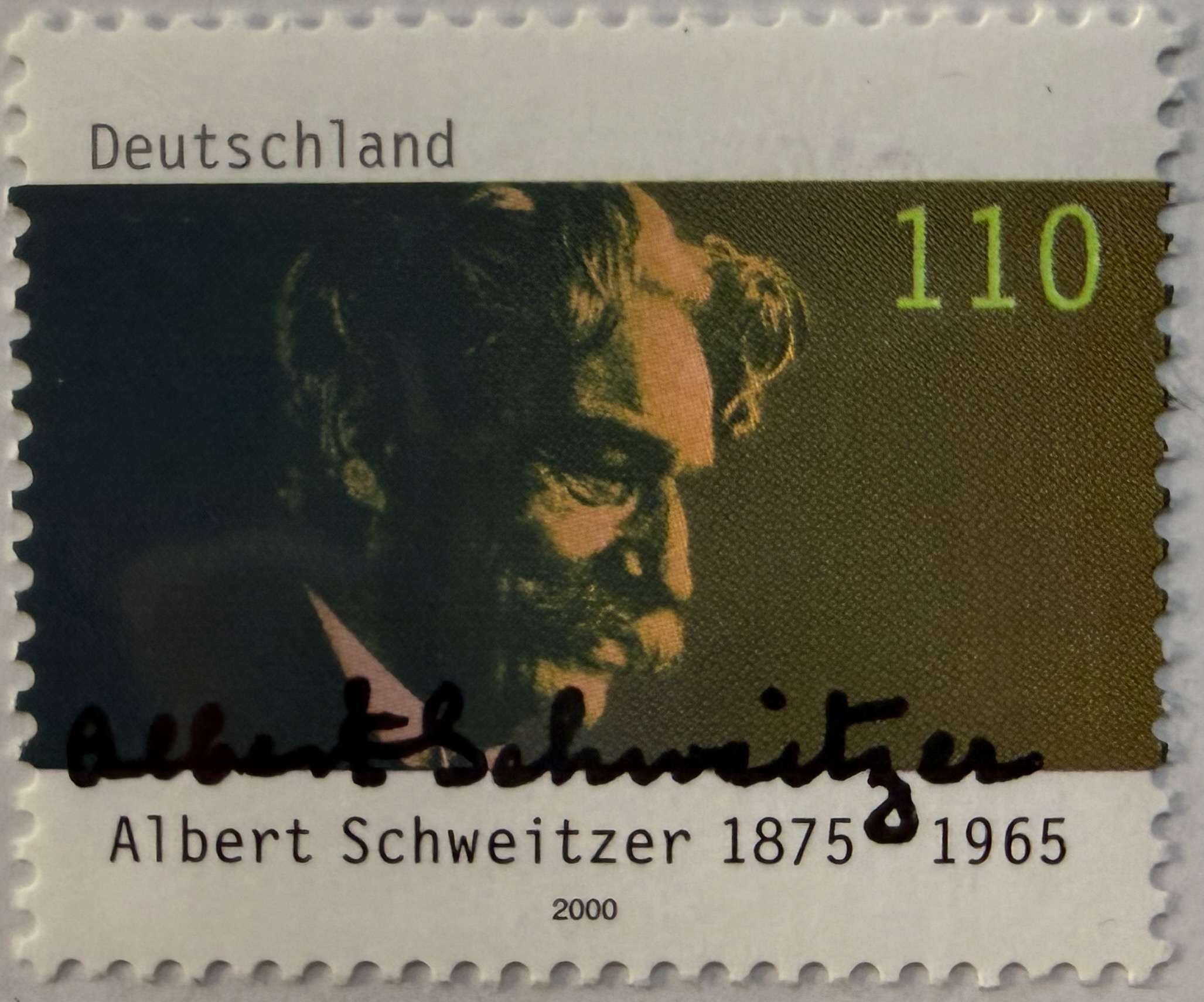
    The Foundation has a significant set of materials related to Albert Schweitzer, the remarkable polymath who walked away from several European career options and dedicated his life to working as a medical doctor in Africa from 1913 until his death in 1965.

    Our collection of Schweitzer materials includes coins and medals, postcards and postage stamps, letters written by Schweitzer, and a small number of books.

    The set can be viewed in this online gallery.

    This collection is available for short term loan by churches, schools, and other community groups. Email us to enquire about its availability for a local exhibition in your community organization.

  • Egyptian Ptah-Sokar-Osiris statue, c. 990/70 BCE

    The Foundation has recently acquired an Egyptian Ptah-Sokar-Osiris statue, also called a papyrus sheath. It has been dated to 990-970 BCE. It is from the estate of an English military family who believed it was brought from Egypt in the early 1900s. It would have stood in a tomb near the mummy of the deceased.

    The statue is of wood and, like most of these figures, it is covered in black varnish. Apparently the black colour referenced the darkness of the night as well as the fertile black mud on the banks of the Nile, and in turn these referred to death and coming alive in the afterlife. 

    The PSO figure wears the atef crown of the god of the afterlife, Osiris. The deceased person becomes an Osiris after death and to make sure he can make the transition, the PSO figure would have contained a papyrus roll with excerpts from the Book of the Dead written in cursive hieroglyphics.

    On the wooden base there are two holes: one for the PSO figure and a small one probably for a wooden sculpture of a hawk, which represented Horus, the son of Osiris and Isis. 

    The PSO figure will be the central feature in the CCCRH Egyptian Exhibition.

  • Aux amis de la constitution

    The Foundation recently acquired a rare and important pamphlet entitled To the Friends of the Constitution relating to the French Revolution. It consists of ten pages written in French by Pierre-Louis Couedic and printed in 1791 in Paris by Nicolas-Leger Moutard.

    The French Revolution is considered to have begun with the storming of the Bastille in 1789 and ended with Napoleon’s coup d’etat in 1799. The document will be the centre-piece in an exhibition about the French Revolution that will be available to schools and other organizations. The display includes coins and banknotes and will be particularly interesting to students learning French and their teachers. Research Associate, Dr Peter Lewis, will be available to explain the display and run through the PowerPoint presentation with the teachers if required.

    Couedic was a member of the Jacobin club, the most influential political group in Paris. The king, Louis XVI, had been caught trying to flee from France, but Couedic wanted him to continue as a constitutional monarch. He proposed that a council of citizens be established to act as guardians of the constitution.

  • Medallion of Ferdinand I

    Further details of the sixteenth-century medallion currently featured in the Cathedral Coins exhibition at St John’s Cathedral, Brisbane are now available:

    Medallion. Ferdinand I (1556–64), Germany, cast metal, undated but c 1560 CE. OBV: Nativity scene: Infant Jesus in manger, Mary with mandorla, Joseph and magi adoring the Christ Child, while shepherds approach from left, all within a grand basilica structure; ox looking on; below R.BVEND 1578 (engraver). REV: Christ holds cross and gestures to chalice with host at his feet (left) and serpent (right) whose head is being crushed by the cross; EGO SVM VIA ET VERITAS NEMO VENIT AD PATREM NISI PER ME (I am the way and the truth … no one comes to the Father but through me). Löbbecke III, 295.

  • Books of Hours

    Vellum leaf from a Book of Hours, France ca 1350

    The CCCRH Foundation now has a collection of 20 medieval Book of Hours manuscripts and the set has recently been made available as a travelling exhibition for loan to schools, faith communities and other community groups with an interest in medieval culture and religion.


    View an online gallery with the current set Books of Hours.

    More information about the collection, including a link to a PowerPoint file to accompany the exhibition when it is used with school students, visit the Exhibitions page of the Foundation website and scroll down to the Books of Hours exhibition..