Author: Gregory C. Jenks

  • Early missionary societies

    The Anglican Focus magazine of the Anglican Church Southern Queensland has recently published an essay by CCCRH researcher, Dr Peter Lewis, on the commemoration of early British missionary activities on medallions and banknotes.

    You can read the essay here.

  • Open Art Images

    Open Art Images

    The website Open Art Images offers a broad scope of images including many images on Islamic Art. These images can be used freely in presentations but also on websites. OAI is a SEARCH AND VISUALIZATION ENGINE FOR HIGH-RESOLUTION IMAGES OF ARTWORKS – from all around the world and from every period in history – that belong to the public domain or to a type of Creative Commons license which allows their reuse. All Images come with detailed information, relevant to the understanding of their historical and cultural context and which informs the user about their current location, source and license.

    OAI respects the privacy of its users by adopting completely anonymous tracking technologies.

  • Hill Museum & Manuscript Library

    Hill Museum & Manuscript Library

    HMML Authority File (HAF) is an open access database that shares lists of authorities used in HMML’s Reading Room and Museum. Metadata in HAF is submitted to the Library of Congress’s Name Authority Cooperative Program (NACO) as part of HMML’s partnership in the Program for Cooperative Cataloging. The HMML Authority File is part of the Resources for Description of Manuscripts from Understudied Christian and Islamic Traditions project funded by the National Endowment for the Humanities that will help build the scholarly infrastructure to create access to endangered manuscripts digitized by the Hill Museum & Manuscript Library. HAF is a living authority file improved over time. Some authorities may begin as sparse records but grow in detail as additional information is uncovered.

  • London Polyglot

    London Polyglot

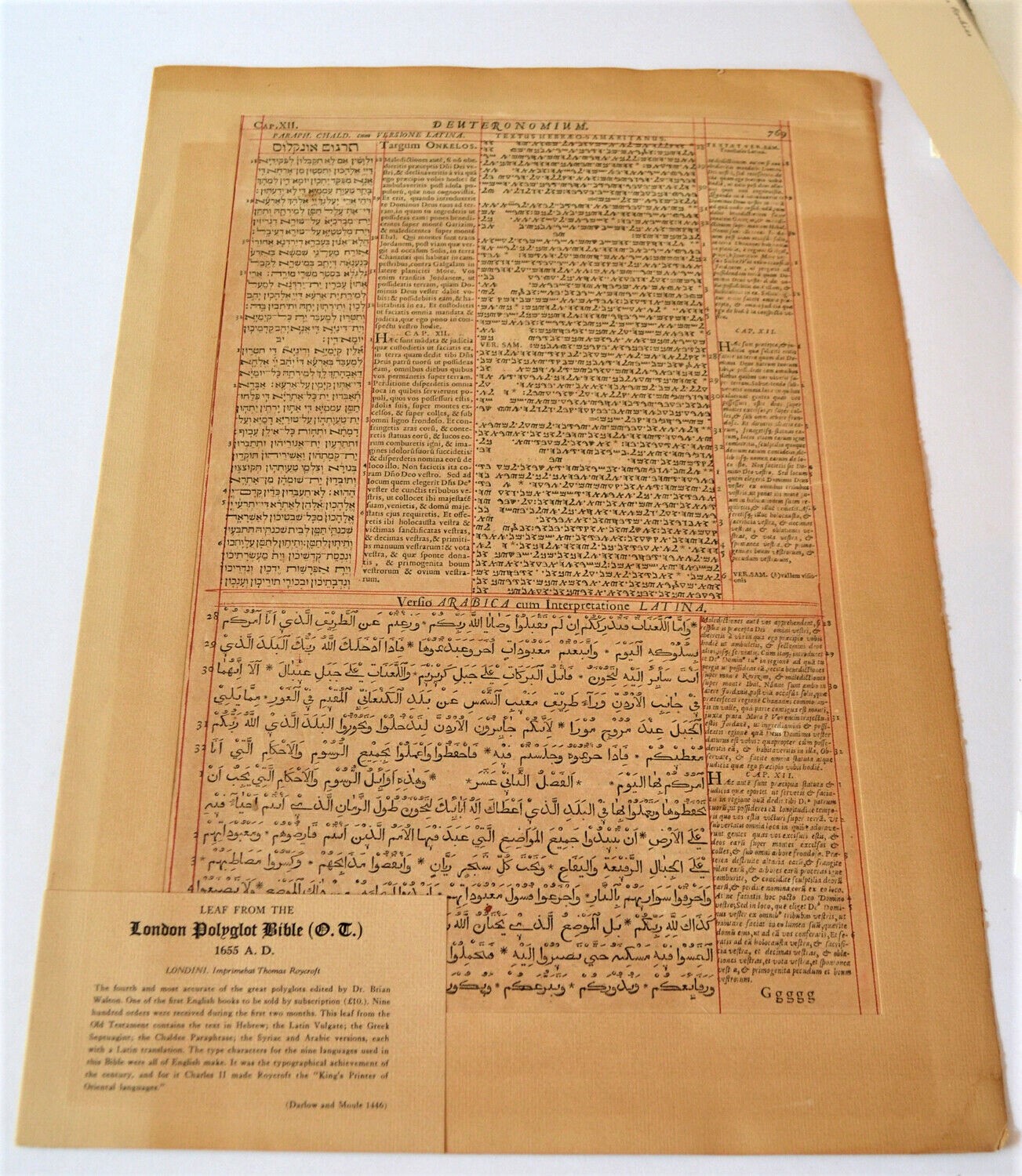
    One of the many delights in my role as the Executive Director for the CCCRH Foundation is to see with my eyes and touch with my hands (cf 1 John 1:1) an amazing variety of artefacts from the past. Some, like this leaf from the seventeenth-century London Polyglot Bible edited by Brian Walton, remind us of the intellectual labour by those who mastered several languages for the sake of checking the accuracy or otherwise of the biblical text: line by line, and word by word.

    The following description comes the digital exhibit for another leaf from the same volume, in the care of Loyola MaryMount University:

    Leaf from the London Polyglot Bible Old Testament, 1655 A.D., Londini: Imprime Thomas Roycroft; The fourth and most accurate of the great polyglots edited by Dr. Brian Walton. One of the first English books to be sold by subscription (£10.). Nine hundred orders were received during the first two months. This leaf from the Old Testament contains the text in Hebrew; the Latin Vulgate; the Greek Septuagint; the Chaldee Paraphrase; the Syriac and Arabic versions, each with a Latin translation. The type characters for the nine languages used in this Bible were all of English make. It was the typographical achievement of the century, and for it Charles II made Roycroft the ‘King’s Printer of Oriental languages’ (Darlow and Moule 1446).
  • Islamic Manuscripts

    Islamic Manuscripts

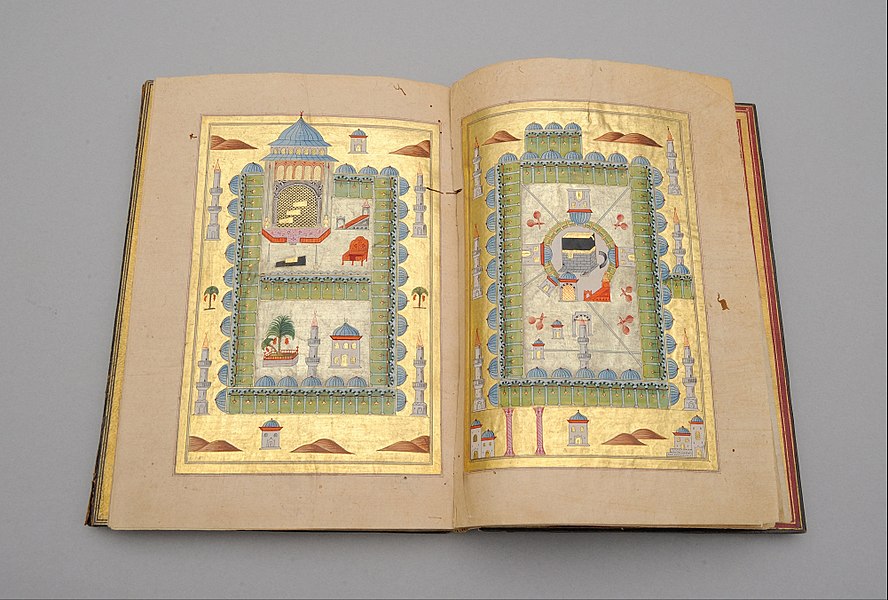
    The Foundation has recently acquired a number of Islamic manuscripts. These beautifully decorated texts are part of the Islamic Coins and Manuscripts collection and are available for exhibition in schools, mosques and other community settings.

    The image featured in this post is a tenth century Qur’an MS with Sura 34.

    Visit the Exhibitions page for more details of collections which are available for local exhibition.

  • New coin articles uploaded

    Three additional articles recently published in the Australasian Coin & Banknote Magazine have now been added to the CCCRH site:

    July 2021 – Telephus on Coins

    June 2021 – Coins of the early Popes

    May 2021 – The Puteal Scribonianum